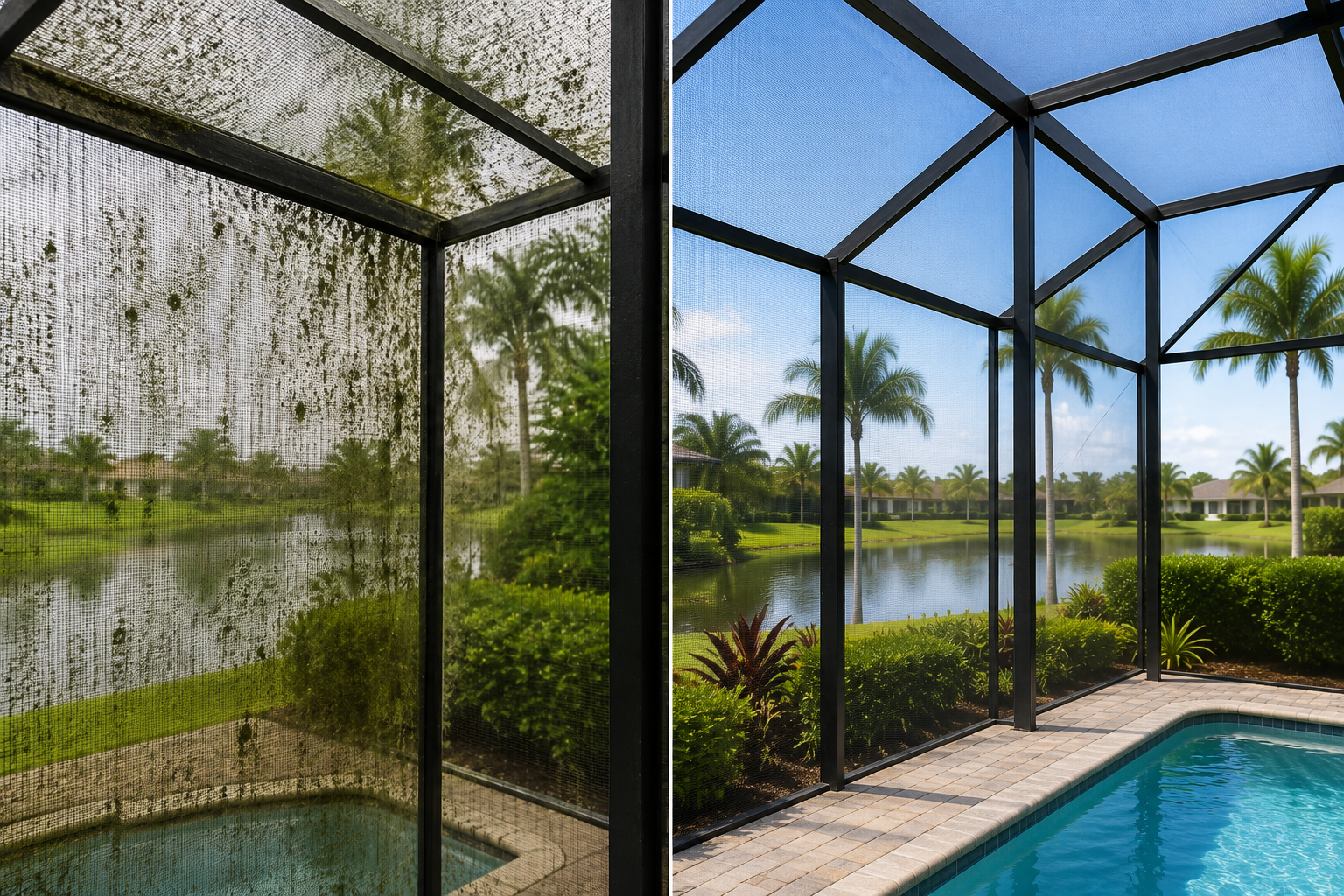
Living in Florida means plenty of sunshine, warm weather, and the ability to enjoy your outdoor living space almost year-round. Unfortunately, Florida’s high humidity, frequent rain, and warm temperatures can also create favorable conditions for mold, mildew, and organic buildup on lanai screens.
If you’ve noticed dark, greenish, or patchy areas on the screens of your lanai, pool cage, or screen enclosure, it’s important not to ignore them. Regular cleaning and proper maintenance can help keep your enclosure looking better and extend the life of your screening material.
Let’s look at why mold and mildew develop on lanai screens and what Florida homeowners can do to help prevent them.
Why Does Mold Grow on Lanai Screens?
Mold and mildew thrive where moisture, warmth, and organic material are present.
Florida’s climate frequently provides all three.
Over time, lanai screens can collect:
- Dust and dirt
- Pollen
- Leaves and plant debris
- Organic particles
- Moisture after rainfall
- Water splashes around the pool
When these materials remain damp for extended periods, unwanted organic growth and staining can begin to develop.
1. Florida’s High Humidity
Humidity is one of the biggest contributors to mold and mildew growth on outdoor surfaces.
Even when it isn’t raining, moisture can remain on screens for long periods, particularly in shaded areas with limited airflow.
This is one reason why one side of a screen enclosure may develop buildup faster than another.
2. Frequent Florida Rain
Heavy rainfall repeatedly exposes your pool cage screens to moisture.
After a storm, screens may remain damp, especially when they’re shaded by the home, landscaping, or nearby structures.
When moisture combines with pollen, dirt, and organic debris, it creates conditions where mold and mildew can develop more easily.
During Florida’s rainy season, it’s a good idea to inspect your lanai more frequently.
3. Shade and Limited Airflow
Sunlight helps outdoor surfaces dry faster.
Screens located near dense landscaping or shaded areas of your home may remain damp much longer than screens exposed to direct sunlight.
Limited airflow can slow the drying process even further.
Keeping the area around your enclosure open enough for air to circulate can help reduce persistent moisture.
4. Trees and Plants Near Your Screen Enclosure
Tropical landscaping can make your pool area beautiful, but nearby plants can also contribute to dirty screens.
Trees and shrubs produce:
- Leaves
- Pollen
- Small branches
- Organic debris
When this material collects against your screens, it can trap moisture and contribute to staining and buildup.
Keep plants from constantly touching the enclosure and trim nearby branches when necessary.
5. Lack of Regular Cleaning
Your screens don’t have to look dirty to have buildup on them.
A thin layer of dust, pollen, salt residue, and organic material can gradually accumulate across the mesh.
If pool cage screens aren’t cleaned for a long time, stains and buildup may become more difficult to remove.
Routine light cleaning is generally easier than dealing with years of accumulated dirt.
How Can You Prevent Mold on Lanai Screens?
A few simple maintenance habits can help keep your screen enclosure cleaner.
Clean Your Screens Regularly
Periodically rinse your screens with clean water to remove loose dirt, pollen, and debris.
If deeper cleaning is necessary, use cleaning methods and products that are appropriate for your specific screen material.
Avoid aggressive scrubbing that could stretch or damage the mesh.
Remove Leaves and Debris
Don’t allow leaves and organic material to accumulate around the bottom of your enclosure.
Removing debris regularly helps reduce the material that can trap moisture against your screens.
Trim Nearby Landscaping
Leave some space between shrubs, trees, and your screen enclosure.
This can improve airflow and reduce the amount of leaves, pollen, and moisture reaching your screens.
Inspect Your Lanai After Heavy Rain
After extended periods of rain, check areas that tend to remain damp.
Pay particular attention to:
- Lower screen panels
- Corners
- Screen doors
- Aluminum framing
- Areas near landscaping
- Shaded sections of the enclosure
Finding buildup early usually makes cleaning much easier.
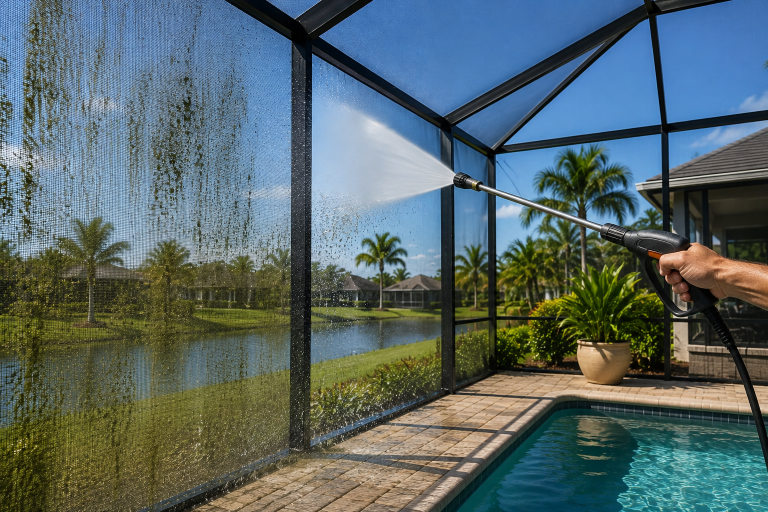
Can You Pressure Wash Lanai Screens?
Pressure washing should be approached carefully.
Excessive water pressure can place unnecessary stress on the screen, spline, and panel edges. Older screening material that has already become brittle from UV exposure may be particularly vulnerable.
Using a gentler cleaning method is often the safer choice when you’re unsure about the condition of your screens.
When Is Cleaning No Longer Enough?
Sometimes dirty-looking screens aren’t just a cleaning problem.
If your screening material is already:
- Brittle
- Severely faded
- Sagging
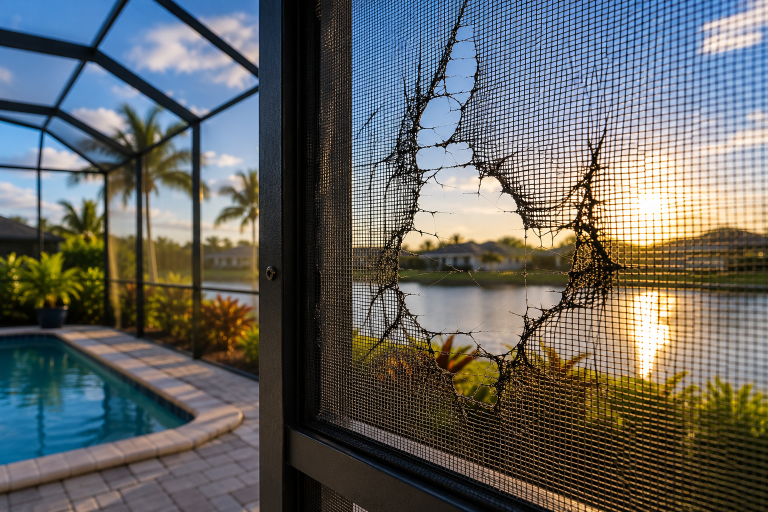
- Torn in multiple places
- Pulling away from the frame
- Developing frequent new holes
- Requiring repeated repairs
it may be time to consider pool cage rescreening rather than continued cleaning and patching.
Replacing worn screens can restore the appearance of your enclosure while improving protection against insects and debris.
Regular Maintenance Can Extend the Life of Your Screens
The easiest way to manage mold, mildew, and buildup is to prevent excessive accumulation in the first place.
Regular cleaning, trimming nearby landscaping, inspecting screens after rainy periods, and repairing small problems promptly can help keep your lanai looking its best.
Routine maintenance also gives you an opportunity to spot aging or damaged screens before they develop larger tears.
Need Lanai Screen Repair or Replacement?
If your screens are damaged, sagging, brittle, or constantly requiring repairs, Best Rescreen Company can inspect your enclosure and recommend the right solution.
We provide professional lanai rescreening, pool cage rescreening, screen replacement, and screen enclosure repair for homeowners throughout Southwest Florida.
🌐 Visit our website: https://bestrescreenco.com/
📞 Call Best Rescreen Company: (239) 344-7774
Keep your lanai clean, comfortable, and protected-and when your old screens are ready for replacement, trust Best Rescreen Company for professional rescreening and repair.