When choosing a new screen for your pool cage, lanai, or screen enclosure, most homeowners focus on durability, lifespan, and insect protection. But there’s another factor that often gets overlooked: screen color.
Black, gray, and lighter-colored screens can affect visibility, glare, and the overall appearance of your outdoor living space. But what about temperature? Does a darker screen actually make your lanai hotter?
Let’s take a closer look at how screen color can influence comfort and visibility-and what else you should consider when choosing screening material for your Florida home.
Why Are Black Screens So Popular?
Black screening is one of the most common choices for pool cages and lanais in Florida.
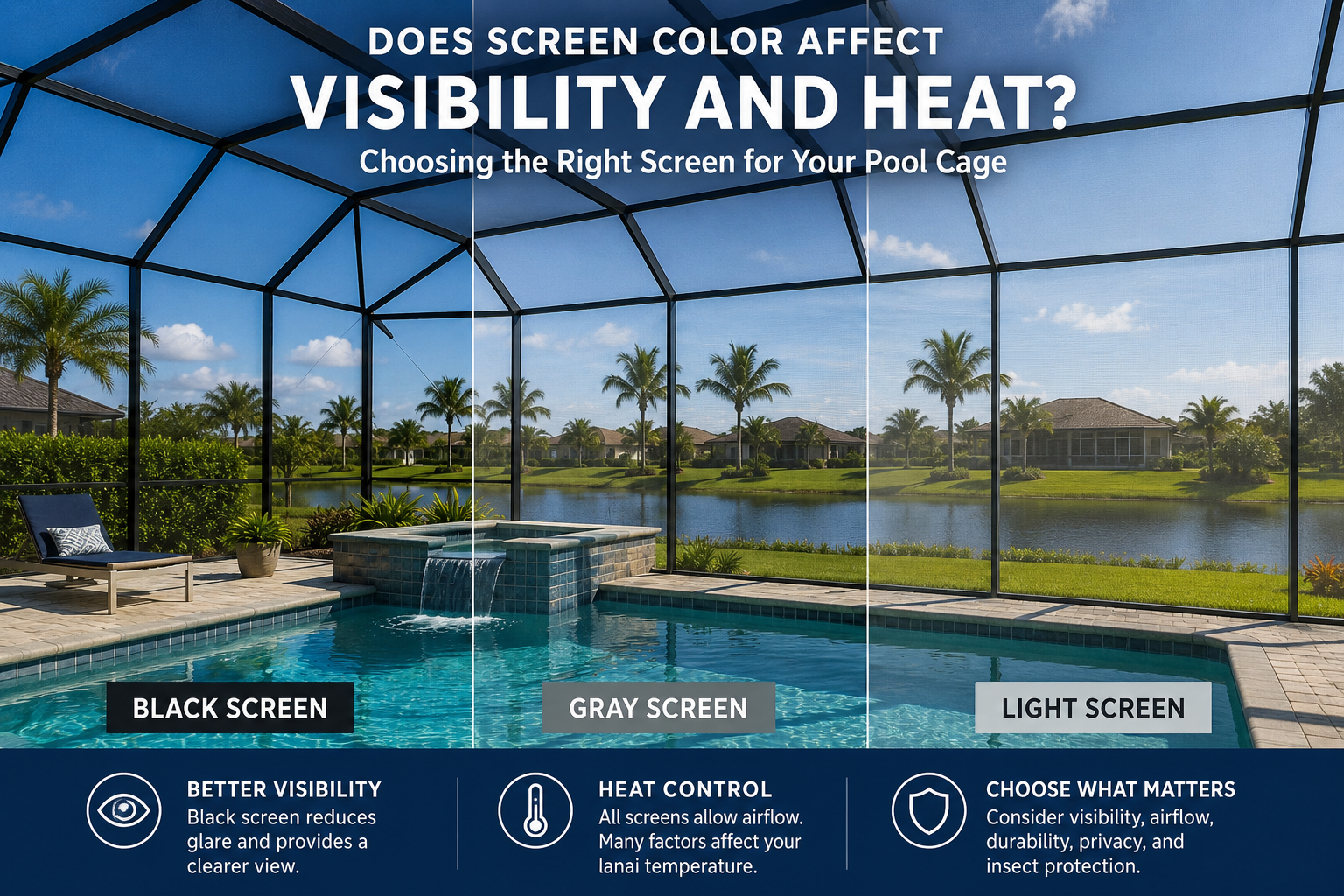
At first, you might assume that a dark screen would block your view more than a lighter one. In many situations, however, the opposite is true.
Black fibers tend to reflect less visible light toward your eyes, which can make the screen itself less noticeable when you’re looking through it. This can provide a clearer view of your:
- Pool
- Backyard
- Landscaping
- Waterfront
- Outdoor living area
For homeowners who want their enclosure to feel open and unobstructed, black screening is often an attractive option.
How Does Screen Color Affect Visibility?
Visibility depends on more than color alone.
Several factors influence how clearly you can see through a screen, including:
- Mesh size
- Fiber thickness
- Screen density
- Lighting conditions
- Angle of sunlight
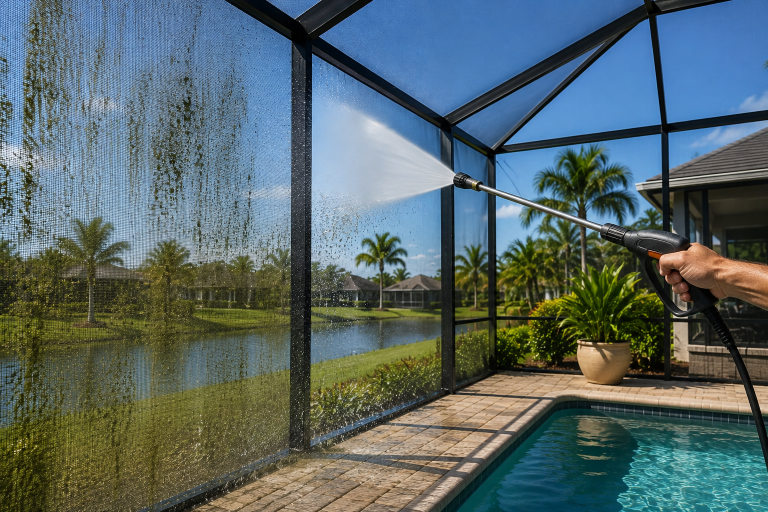
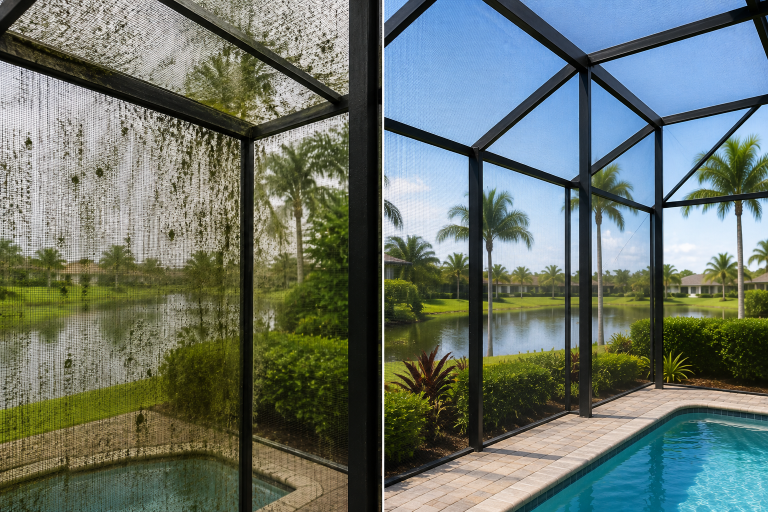
- Screen cleanliness
- Type of screening material
Darker screens often produce less noticeable glare, allowing your eyes to focus more easily on the scenery beyond the enclosure.
Lighter screens may reflect more sunlight, making the mesh itself more noticeable under certain lighting conditions.
Does Black Screen Make a Lanai Hotter?
Dark materials generally absorb more solar energy than lighter materials, so the screen fibers themselves may become warmer in direct sunlight.
However, this doesn’t necessarily mean your entire screened lanai will become significantly hotter simply because you choose a black screen.
Screening has an open mesh structure that allows air to pass through. The temperature inside your enclosure is also influenced by several other factors, including:
- Direct sun exposure
- Orientation of your home
- Amount of shade
- Size of the enclosure
- Air circulation
- Roof coverage
- Screen density and material
Because of these variables, screen color alone should not determine your choice.
Mesh Density May Matter More Than Color
If reducing sunlight or increasing privacy is your main goal, the density of the screen can be just as important-or more important-than its color.
A tighter mesh may reduce some light and visibility while also affecting airflow.
For example, a standard insect screen and a tighter No-See-Um Screen can feel different even when both are the same color.
That’s why homeowners should consider the complete screen specification rather than choosing based on appearance alone.
What About Gray Screens?
Gray screening is another option for residential screen enclosures.
It can provide a neutral appearance and may complement certain frame colors, exterior finishes, and architectural styles.
However, under bright Florida sunlight, a lighter screen may reflect more light toward the viewer, making the mesh more noticeable.
For homeowners who prioritize a clear view of their pool, landscaping, or waterfront, black screening is often preferred.
Does Screen Color Affect Privacy?
Screen color alone generally shouldn’t be treated as a privacy solution.
Lighting conditions can change how visible an area is from either side of a screen, particularly during the day versus at night.
If privacy is important, consider a screening material specifically designed to provide greater coverage rather than relying solely on color.
Color Isn’t the Only Factor When Choosing Pool Cage Screens
When planning a pool cage rescreening, consider how you actually use your outdoor space.
Important factors include:
- Insect protection
- Visibility
- Airflow
- UV resistance
- Durability
- Pets
- Privacy
- Coastal exposure
- Maintenance requirements
- Expected lifespan
A standard screen may be perfect for one property, while another homeowner may benefit from Super Screen, Pet Screen, No-See-Um Screen, or another specialized screening material.
Which Screen Is Best for Your Pool Cage?
There isn’t one screening material that’s ideal for every Florida home.
If maintaining a beautiful outdoor view is your priority, look for a screen that provides excellent visibility and airflow.
If tiny insects are your biggest concern, a tighter mesh may be more appropriate. If you have dogs or cats, durability may matter more than maximum visibility.
The goal is to find the right balance between visibility, airflow, durability, and insect protection.
Need Help Choosing the Right Screen?
If you’re planning a pool cage rescreening and aren’t sure which screen color, mesh, or material is best for your home, Best Rescreen Company can help.
We provide professional pool cage rescreening, lanai screen replacement, screen enclosure repair, and screening solutions for homeowners throughout Southwest Florida.
🌐 Visit our website: https://bestrescreenco.com/
📞 Call Best Rescreen Company: (239) 344-7774
Choosing the right screen isn’t just about color. The right combination of mesh, material, visibility, airflow, and durability can make your outdoor living space more comfortable and enjoyable for years to come.