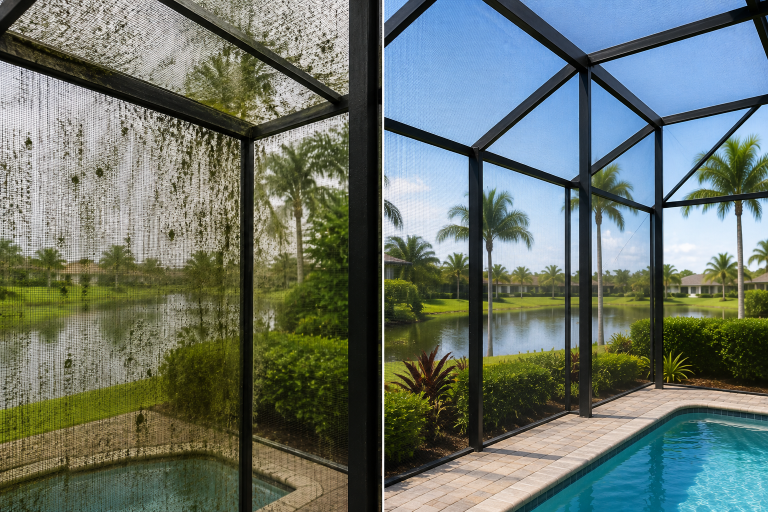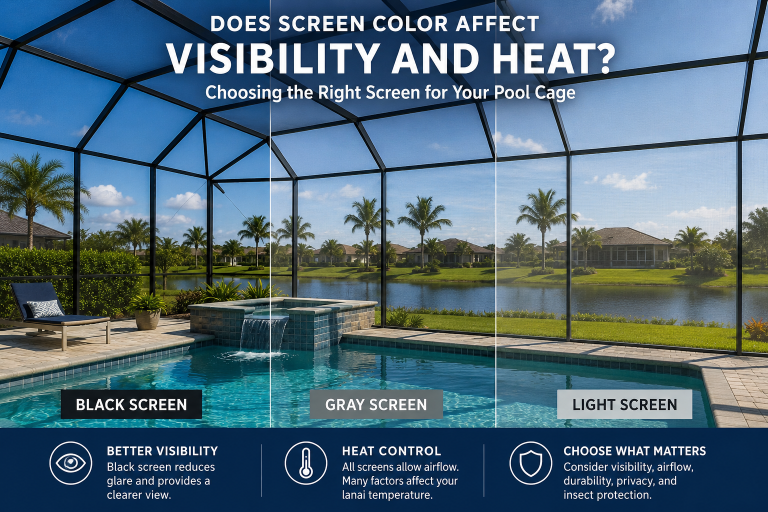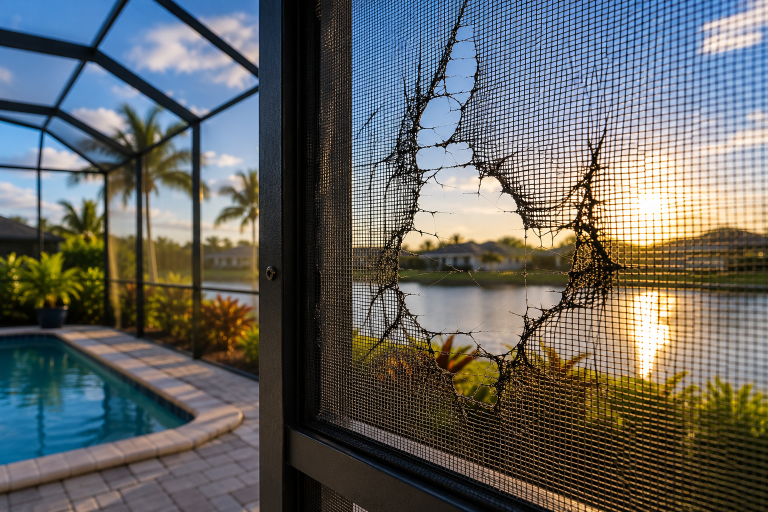
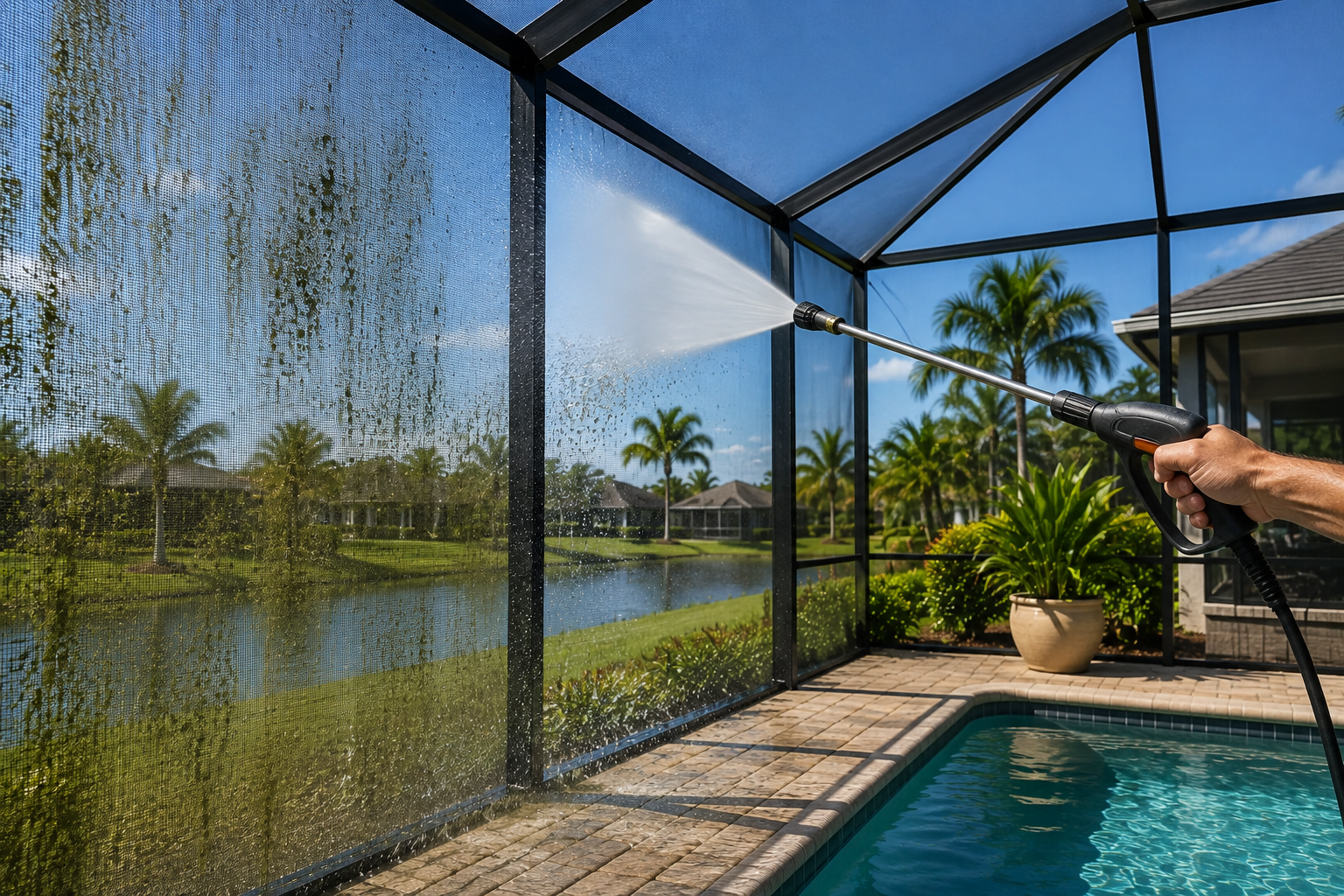
Pressure washing is a popular way to clean outdoor surfaces in Florida. It can quickly remove dirt, pollen, grime, and buildup from patios, driveways, and other exterior areas. But when it comes to pool cage screens, high-pressure water can sometimes do more harm than good.
Screen enclosure mesh is much more delicate than concrete or pavers. This is especially true for older screens that have spent years exposed to Florida’s intense sunlight, heat, humidity, rain, and storms.
So, can you pressure wash pool cage screens safely? Here’s what Florida homeowners should know before cleaning their screen enclosure.
Can You Pressure Wash Pool Cage Screens?
It depends on the condition of the screen, the amount of pressure used, the distance from the surface, and the cleaning technique.
A powerful stream of water can put significant stress on the screening material. If the screen is already old, brittle, loose, or damaged, pressure washing may cause additional problems.
Potential damage can include:
- Tears in the screen
- Stretched screening material
- Sagging panels
- Loss of screen tension
- Damage around panel edges
- Screens pulling away from the frame
- Small holes becoming larger
For these reasons, using high-pressure water directly against pool cage screens should be approached carefully.
1. Older Pool Cage Screens Are More Vulnerable
Screening material naturally ages over time.
Florida’s intense UV exposure and heat can gradually reduce the flexibility of older screens. Eventually, the mesh may become dry and brittle.
The screen may still look acceptable from a distance, but it might no longer have the strength it had when it was first installed.
A strong stream of water can put enough stress on a weakened area to cause a tear.
2. High Pressure Can Stretch the Screen
Pool cage screens need proper tension to remain secure and look their best.
When concentrated water pressure repeatedly pushes against one area, the material may stretch or become loose.
This can result in:
- Sagging sections
- Wavy-looking panels
- Uneven tension
- Loose screen material
Once a panel has been significantly stretched, replacing it may be necessary to restore proper tension.
3. Screens Can Pull Away From the Frame
Screen panels are typically secured to the aluminum frame using screen spline.
Directing strong water pressure toward the edges of a panel can place additional stress on these attachment points.
If the spline is aging or the screen is already loose, the mesh may begin pulling away from the frame.
Once this happens, insects and debris may be able to enter the enclosure even if the screen itself doesn’t have a visible hole.
4. Small Holes Can Turn Into Larger Tears
Before cleaning your pool cage, inspect the screens carefully.
A tiny hole or weak spot might not look serious, but concentrated water pressure can make the damage worse.
What begins as a small tear could quickly become a much larger opening requiring screen repair or panel replacement.
This is especially important for older enclosures where several panels may already be showing signs of wear.
5. Getting Too Close Increases the Risk
The closer a pressure washer nozzle is to the screen, the greater the force applied to a small area.
Cleaning techniques that work well on concrete, brick, or driveway pavers may be far too aggressive for delicate screen mesh.
Pool cage screens generally require a much gentler approach.
What’s a Safer Way to Clean Pool Cage Screens?
For routine maintenance, high pressure often isn’t necessary.
Depending on the type and condition of the screen, a gentler approach may include:
- A garden hose
- Low to moderate water pressure
- A soft brush or sponge
- A mild cleaner appropriate for the material
- Gentle rinsing with clean water
Avoid aggressive scrubbing or concentrating water pressure on one small area.
If you’re using a cleaning product, make sure it’s appropriate for both your screening material and aluminum enclosure.
How Often Should You Clean Your Screen Enclosure?
There’s no single cleaning schedule that works for every Florida home.
Your pool cage may require more frequent cleaning if it’s located:
- Near trees or dense landscaping
- Close to the coast
- In a heavily shaded area
- Where pollen is common
- Near standing water
- In an area where leaves and organic debris accumulate quickly
Regular light cleaning can prevent heavy buildup and reduce the need for aggressive cleaning methods later.
Inspect Your Screens Before Cleaning
Before cleaning your enclosure, take a few minutes to look for signs of damage.
Check for:
- Small holes
- Existing tears
- Sagging panels
- Brittle screen material
- Loose spline
- Screens pulling away from the frame
- Damaged door screens
If you find these problems, high-pressure cleaning could make them worse.
When Is Cleaning No Longer Enough?
Sometimes a pool cage doesn’t look bad because it’s dirty-the screens themselves are simply reaching the end of their useful life.
Consider professional pool cage rescreening if your screens:
- Have become brittle
- Tear frequently
- Have multiple damaged panels
- Consistently sag
- Pull away from the frame
- Require repeated patching or repairs
Replacing worn screens can restore the appearance of your enclosure while improving protection against insects, leaves, and debris.
Proper Maintenance Can Help Your Screens Last Longer
Your pool cage is constantly exposed to Florida’s sun, rain, humidity, wind, and seasonal weather.
Regular but gentle cleaning can help maintain the enclosure and make it easier to spot developing problems.
The key is to clean the screens without placing unnecessary stress on the mesh, spline, or frame.
If you’re unsure whether your older screens can handle pressure washing, inspecting their condition first can help you avoid turning a small problem into a costly repair.
Need Pool Cage Screen Repair or Rescreening?
If you’ve noticed torn, sagging, brittle, or loose screens, Best Rescreen Company can inspect your enclosure and recommend the right solution.
We provide professional pool cage rescreening, lanai screen replacement, screen enclosure repair, and related services for homeowners throughout Southwest Florida.
🌐 Visit our website: https://bestrescreenco.com/
📞 Call Best Rescreen Company: (239) 344-7774
Keep your pool cage clean without putting your screens at unnecessary risk. And when aging or damaged screens need professional attention, trust Best Rescreen Company for quality screen repair and rescreening.