Your pool cage screen works every day to keep mosquitoes, insects, leaves, and debris away from your outdoor living space. But even when there are no obvious tears, screen material can gradually lose its flexibility and become dry and brittle.
For Florida homeowners, this is especially common. Intense sunlight, UV exposure, high temperatures, humidity, coastal air, and seasonal storms can all contribute to the natural aging of a screen enclosure.
Understanding why screens become brittle can help you recognize early warning signs and determine when it’s time for repair or replacement.
1. Constant UV Exposure
Florida sunshine is one of the biggest factors affecting the lifespan of pool cage screens.
A screen enclosure may be exposed to direct sunlight for hours every day. Over time, UV radiation can gradually weaken the screen fibers.
The material may begin to:
- Lose flexibility
- Become dry and brittle
- Fade in color
- Tear more easily
- Develop small weak spots
This is why an older screen may appear fine from a distance but tear when exposed to additional stress.
2. Florida’s High Temperatures
Heat also contributes to screen deterioration.
Screening materials repeatedly heat up during the day and cool down at night. Over years of exposure, these temperature changes can contribute to the loss of flexibility and strength.
Combined with strong UV radiation, Florida’s heat can accelerate the aging process.
3. Humidity and Heavy Rain
Florida’s climate brings high humidity and frequent rain, which means your outdoor enclosure is constantly exposed to moisture.
Dirt, organic debris, moisture, and changing weather conditions can contribute to normal wear.
Regular cleaning and inspections help keep your pool cage in better condition while making it easier to identify developing problems.
4. Coastal Air
Homes near the coast face additional environmental challenges.
Salt-laden air can be particularly tough on outdoor structures and hardware. For coastal homes, it’s important to choose quality screening materials and regularly inspect the entire enclosure.
During an inspection, pay attention to:
- Screen panels
- Aluminum framing
- Screws and fasteners
- Screen spline
- Doors
- Hinges and latches
Maintaining the entire system is important because the screen is only one component of your enclosure.
5. Strong Winds and Florida Storms
Wind continuously places pressure on screen panels.
A newer, flexible screen can handle normal movement much better than old, brittle material. Once the screen has weakened, however, strong winds may turn a small damaged area into a much larger tear.
After severe Florida weather, inspect your screen enclosure for loose panels, small holes, damaged spline, or areas where the screen has begun pulling away from the frame.
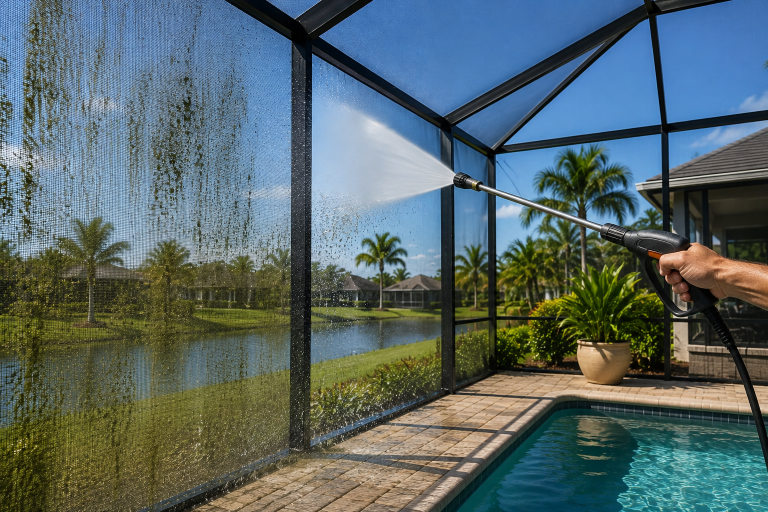
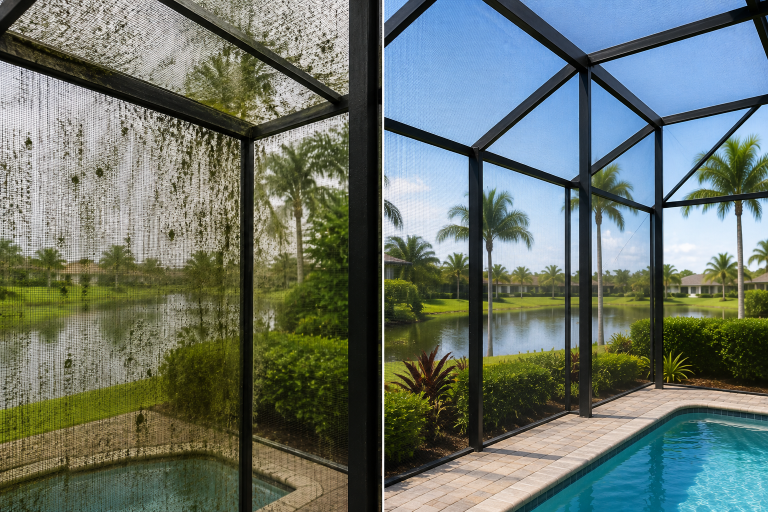
6. Dirt and Improper Cleaning
Over time, your screens collect:
- Dust
- Pollen
- Salt residue
- Leaves
- Dirt and organic debris
Regular cleaning can help maintain your enclosure, but it’s important to use appropriate cleaning methods.
Aggressive scrubbing or excessive pressure from a pressure washer may damage screening material—especially if the screen is already old and brittle.
7. Natural Aging of the Screen Material
No screening material lasts forever.
Even with proper maintenance, years of exposure to Florida’s climate eventually take their toll. As the material ages, routine inspections become increasingly important.
Pay particular attention to screens around:
- Corners
- Doors
- Lower enclosure sections
- Panel edges
- Fasteners and spline channels
These areas may show signs of wear before the rest of the enclosure.
How Can You Tell If Your Pool Cage Screen Is Becoming Brittle?
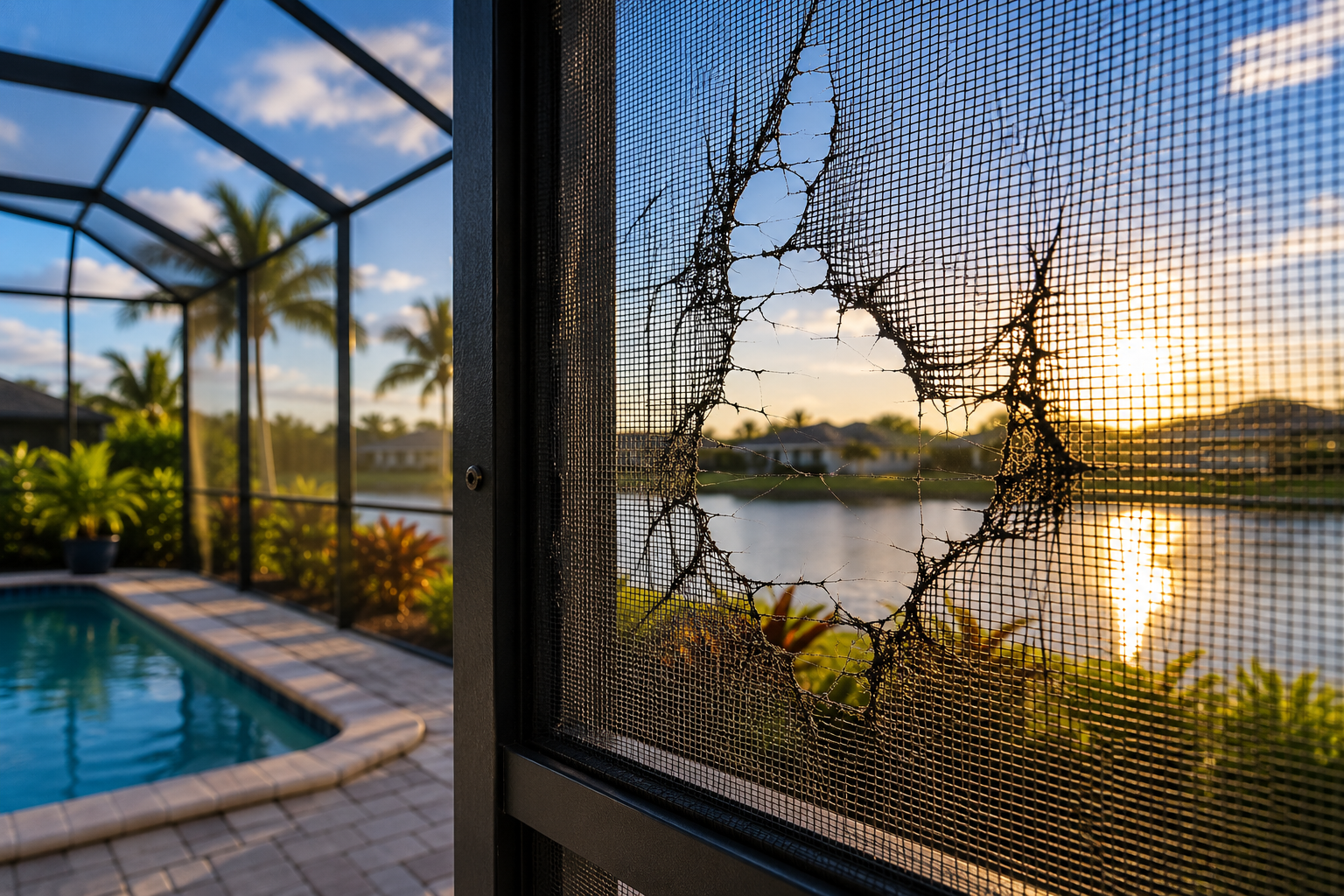
You don’t have to wait for a large tear to appear.
Common warning signs include:
- Faded screen material
- A dry or stiff texture
- Small holes
- Tears near panel edges
- Sagging sections
- Loss of screen tension
- Frequent new damage
- Screens that tear easily
If these problems are appearing throughout your enclosure, repeatedly replacing individual panels may no longer be the most practical solution.
Screen Repair or Complete Rescreening?
If one relatively new screen panel is damaged, an individual panel replacement may be all you need.
However, if the screening throughout your pool cage has become old and brittle, complete pool cage rescreening may provide better long-term value.
A complete rescreening can:
- Replace aging and weakened panels
- Restore consistent screen tension
- Improve the appearance of your enclosure
- Allow you to upgrade your screen material
- Reduce the need for repeated small repairs
A professional inspection can help determine which option makes the most sense for your enclosure.
Choose the Right Screen Material
When replacing old screens, don’t focus on price alone. Consider how the material will perform in your specific environment.
Depending on your needs, you may choose traditional screening or more specialized options such as Super Screen, Pet Screen, or other durable screening materials.
The right choice depends on factors such as your home’s location, pets, exposure to the elements, and desired durability.
Need Pool Cage Rescreening?
If your screens have become brittle, frequently tear, or show signs of widespread deterioration, Best Rescreen Company can inspect your enclosure and recommend the right solution.
We provide professional pool cage rescreening, lanai screen replacement, screen enclosure repair, and related services for homeowners throughout Southwest Florida.
🌐 Visit our website: https://bestrescreenco.com/
📞 Call us today: (239) 344-7774
Don’t wait for aging screens to turn into major tears. Timely repairs or professional rescreening can help keep your pool cage attractive, functional, and protected for years to come.